The word nonchalant describes an attitude of easy composure, effortless calm, and casual detachment. When someone exhibits a nonchalant disposition, they navigate high-pressure situations or mundane encounters without displaying anxiety, stress, or intense excitement. Linguistically, the term entered the English language from French roots, combining a negative prefix with a verb meaning to care or be concerned. In standard grammar, it functions primarily as a descriptive adjective to characterize individuals, expressions, or physical gestures that radiate pure emotional tranquility.
Understanding the true essence of nonchalant requires observing how a person responds to unpredictable environments. Someone who maintains a nonchalant composure can hear surprising news or face an unexpected obstacle without losing their internal balance. This quality makes the expression particularly useful for describing individuals who possess an innate ability to appear unbothered, regardless of how chaotic their external surroundings might become.
The Dual Nature of Nonchalance
There is a fascinating duality embedded within a nonchalant demeanor because it can convey either admirable grace or troubling indifference. On the positive side, a nonchalant reaction under immense stress demonstrates remarkable emotional control and supreme confidence. Athletes performing during critical championship moments or public speakers handling unexpected technical glitches often rely on a nonchalant presence to steady their nerves and reassure their surrounding audience.
On the negative side, an excessively nonchalant posture can easily be interpreted as coldness or a lack of basic empathy. When important conversations demand emotional vulnerability or immediate action, acting completely nonchalant might leave others feeling ignored or undervalued. Mastering this social balance depends heavily on context, as knowing when to show genuine passion versus when to project a nonchalant calm remains an essential life skill.
Nonchalant in Modern Slang and Gen Z Culture
In recent years, digital platforms like TikTok and Instagram have transformed how younger generations apply the concept of being nonchalant in daily conversation. Within social media discourse, maintaining a nonchalant persona has become synonymous with projecting ultimate social cool and emotional independence. Viral content frequently highlights individuals who master the art of looking perpetually detached, transforming a classic vocabulary word into an internet lifestyle trend.
This cultural shift is especially noticeable within modern dating dynamics, where being perceived as nonchalant serves as a defense mechanism against vulnerability. Young adults often embrace a nonchalant style of interaction to avoid appearing overly eager or emotionally invested too early. However, internet commentators frequently debate whether this nonchalant trend fosters healthy emotional boundaries or merely encourages romantic neglect masked as casual cool.
Clear Examples of Nonchalant Used in Sentences
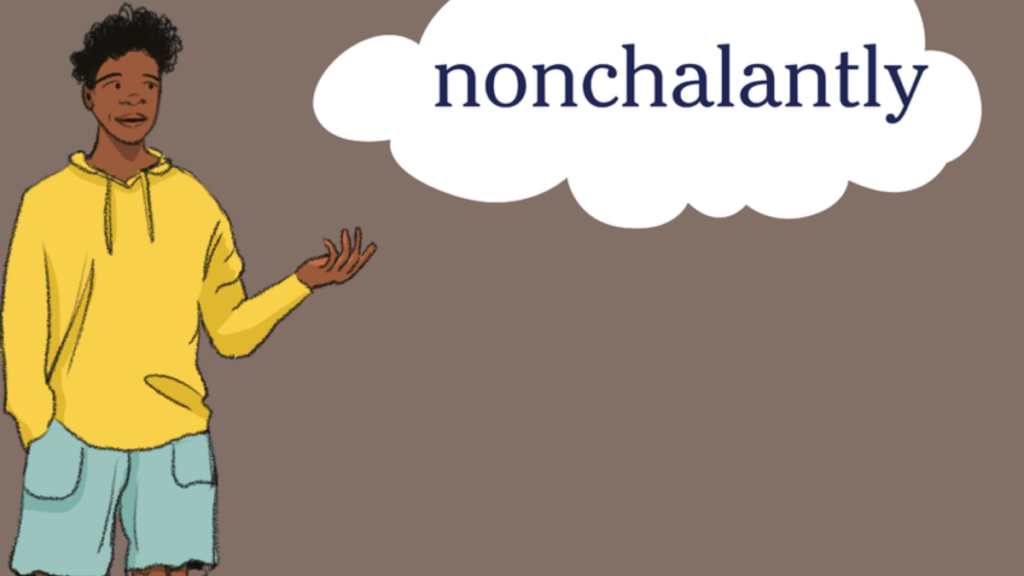
Observing practical language patterns helps clarify how to seamlessly integrate this vocabulary term into everyday writing and conversation. For instance, a student might offer a nonchalant shrug when asked about an upcoming major exam, signaling to peers that preparation is entirely under control. In professional environments, a seasoned manager might give a nonchalant response to an unexpected scheduling conflict, reassuring the team through steady body language.
The word also adapts effectively when describing subtle human gestures, artistic performances, or character behaviors in literature. An author might describe a detective entering a tense crime scene with a nonchalant stride to emphasize expert confidence. By replacing generic terms like calm or relaxed with nonchalant, writers immediately elevate the sophistication and precision of their prose.
Synonyms Antonyms and Nuanced Word Comparisons
To fully appreciate the scope of this term, it helps to compare it alongside closely related vocabulary words. Synonyms such as composed, insouciant, and unbothered each share a thematic overlap with nonchalant, yet they carry slightly different emotional weights. While composed implies deliberate self-discipline, nonchalant suggests an effortless, innate aura of relaxation that requires no conscious internal struggling.
Conversely, antonyms like anxious, hyperactive, and passionate highlight the complete absence of casual detachment. Curious language enthusiasts often ask whether the word chalant exists as an official opposite, but linguistic history shows it never established itself in standard English dictionaries. Today, using chalant remains a playful slang joke rather than formal vocabulary.
How to Respond When Someone Calls You Nonchalant
Receiving feedback that you appear nonchalant can serve as either a compliment regarding your poise or a subtle critique of your engagement level. If a colleague compliments your nonchalant attitude during a stressful work presentation, take it as recognition of your professional composure. It indicates that your outward presence helped stabilize an otherwise chaotic team environment.
If a close friend or romantic partner describes you as nonchalant during a serious personal conversation, it may be time to adjust your communication style. Demonstrating active listening, showing visible enthusiasm, and expressing clear empathy can prevent your natural calm from looking like total emotional detachment.
The Cultural Evolution of Casual Detachment
Throughout history, societal perceptions of a nonchalant attitude have continuously shifted across different eras and art forms. Classical literature often depicted nonchalant aristocrats as figures of refinement, elegance, and supreme social standing. In contrast, modern cinema frequently employs nonchalant action heroes to embody bravery, showing protagonists who crack light jokes while facing extreme physical dangers.
In contemporary workplaces, business leaders increasingly value a nonchalant approach to crisis management alongside intense dedication to results. Striking a balance between an unbothered demeanor and high productivity proves that an individual can stay composed without sacrificing organizational goals or professional excellence.
Psychological Benefits of Staying Calm Under Pressure
Psychologists often examine the mental mechanisms that enable individuals to maintain a nonchalant demeanor during chaotic moments. Developing a nonchalant response mechanism allows the brain to regulate stress hormones, preventing panic from clouding logical decision-making processes. People who master this level of composure tend to recover more swiftly from sudden emotional setbacks and unexpected challenges.
However, mental health professionals also warn against using a nonchalant exterior to suppress genuine emotional trauma or chronic anxiety. True resilience involves acknowledging internal distress privately while projecting a nonchalant composure publicly to navigate life’s demands smoothly.
Conclusion
The word nonchalant captures a unique human state where calm composure meets casual indifference. From its historical linguistic origins to its current status as a popular social media term, the concept continues to evolve alongside modern communication. Balancing a nonchalant composure with genuine human connection ensures you remain cool under pressure without appearing emotionally distant.
The enduring popularity of the term highlights our universal fascination with emotional control in an increasingly fast-paced world. Whether viewed as an admirable trait or a modern dating trend, understanding nonchalance enriches both your vocabulary and your interpersonal awareness.
Frequently Asked Questions
Is being nonchalant a good or bad personality trait
Whether a nonchalant disposition is helpful or harmful depends entirely on the situation at hand. In high-stress professional environments, showing a nonchalant composure helps reduce panic and maintains clear logical thinking. However, in personal relationships, being excessively nonchalant can make close friends feel unappreciated or emotionally disconnected.
Understanding the context allows individuals to apply this mindset constructively without damaging social ties. Embracing a balanced approach ensures you project strength without appearing cold or unfeeling toward loved ones.
What is the opposite of a nonchalant person
The opposite of a nonchalant individual is someone who appears outwardly anxious, highly reactive, or deeply emotional. Words like passionate, agitated, concerned, and hyper-vigilant describe behaviors that contrast sharply with casual detachment. These individuals visibly display their internal feelings rather than projecting an unbothered exterior.
Recognizing these opposing traits helps writers choose precise vocabulary when crafting character descriptions or essays. Contrasting a nonchalant demeanor with an anxious reaction creates vivid narrative tension in literature.
What does nonchalant mean in Gen Z slang
In modern online culture, Gen Z uses nonchalant to describe someone who acts completely chill, unbothered, and emotionally detached. It often refers to an aesthetic or social posture where a person avoids showing excessive excitement or stress on digital platforms like TikTok.
This slang evolution shows how classical language adapts to digital communication trends seamlessly. Young adults frequently use the term to celebrate social confidence and effortless personal style.
Is chalant a real English word
While online trends frequently use chalant as a joke to mean overly concerned, it is not an official dictionary word. Standard English relies on terms like anxious, caring, or eager to express the true opposite meaning.
Linguists view these playful inventions as natural creative expansions of everyday spoken language. However, writers should avoid using chalant in formal academic or professional contexts.
How do you pronounce nonchalant correctly
The standard pronunciation breaks down into three distinct spoken syllables, rendered phonetically as NON-shuh-lahnt. Mastering the correct emphasis on the opening syllable ensures natural spoken delivery in both casual conversations and professional settings.
Practicing this phonetic breakdown builds public speaking confidence when presenting sophisticated vocabulary words. Clear pronunciation enhances overall verbal communication in formal environments.
What is the difference between nonchalant and indifferent
While both words deal with a lack of overt emotion, nonchalant focuses on a calm, relaxed physical appearance and easy composure. Indifference specifically highlights a total lack of internal care, interest, or moral concern regarding an outcome.
Distinguishing between these subtle nuances ensures accurate word selection in professional writing. Choosing the right term prevents misunderstandings when describing human behavior and attitudes.
Also Read: Alani Energy Drink