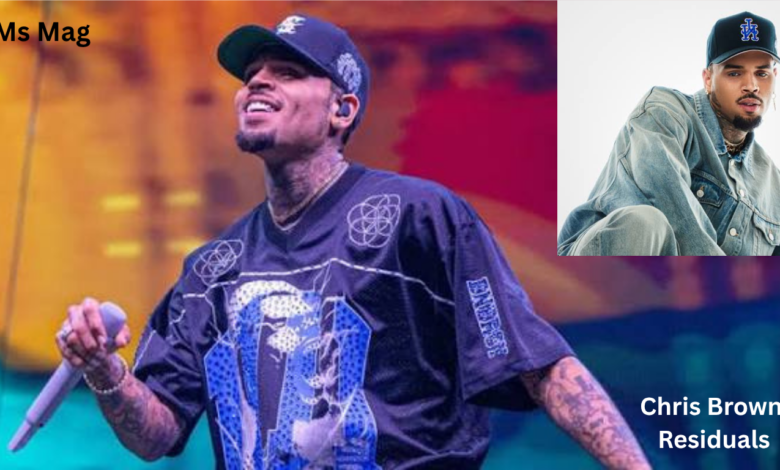
Chris Brown Residuals When people talk about the earnings of major recording artists, they often focus on album sales, concert tours, endorsements, and streaming numbers. There is another part of the music business that gets much less attention: residual income. The phrase Chris Brown residuals is increasingly used by people who want to understand how a successful artist can continue earning money from music long after a song has been released.
The important thing to understand is that “residuals” is not always the precise industry term. Music income is generally divided into different types of royalties, licensing payments, publishing income, performance royalties, mechanical royalties, and other contractual revenue. The amount an artist receives depends on ownership, songwriting credits, recording agreements, licensing arrangements, and the way a particular piece of music is used.
For an artist with a catalog spanning many years, these revenue streams can become significant. Chris Brown has released music consistently since the mid-2000s, giving him a large body of recordings that can continue generating revenue whenever listeners stream, purchase, broadcast, or otherwise use those works.
What Does Chris Brown Residuals Mean
The phrase Chris Brown residuals generally refers to ongoing money associated with his previously released music and other recorded work. Unlike a salary that is paid for a current job, royalty income can continue arriving because an older song is still being consumed or licensed.
That does not mean every play automatically sends the artist a fixed payment. Music royalties involve multiple parties. Depending on the recording, money may be divided between the performer, songwriter, producer, record label, publisher, performing-rights organization, distributor, and other rights holders.
This distinction is essential when estimating an artist’s income. A song can generate substantial revenue without the artist personally receiving all of it. The final amount depends on the contracts and rights attached to the specific recording.
How Music Royalties Actually Work

The music industry generally separates the copyright in a musical composition from the copyright in a sound recording. The composition represents the underlying song, Chris Brown Residuals including its melody and lyrics, while the sound recording is the particular recorded performance listeners hear.
That creates multiple possible income streams. If Chris Brown receives songwriting credit on a track, he may participate in publishing-related revenue. If he owns or receives contractual income from a master recording, he can also benefit from the exploitation of that recording.
Streaming makes the picture more complicated because services pay rights holders according to licensing arrangements and usage. There is no universal “one stream equals one payment to the artist” formula. Rates can vary according to platform, territory, subscription type, rights ownership, and contractual arrangements.
Why Chris Brown Has a Large Catalog to Monetize
Chris Brown’s career has lasted for many years, beginning with his self-titled debut album in 2005. Since then, he has released numerous studio albums, singles, collaborations, and other projects. A long career creates an important advantage in the royalty business: there are more pieces of intellectual property capable of generating income.
Older songs do not necessarily disappear when newer releases arrive. A successful track can return to public attention through playlists, social media, movies, television, remixes, live performances, or viral trends. When that happens, consumption of the underlying music can increase again.
That is one reason discussions about Chris Brown residuals remain relevant even when the conversation is focused on songs released years ago. A music catalog can have a very long economic life, particularly when an artist has accumulated recognizable recordings over multiple eras.
Streaming and Ongoing Music Income
Streaming has transformed how listeners consume music. Instead of purchasing an album once and listening to it indefinitely, audiences can repeatedly access songs through subscription platforms. Each use contributes to the broader revenue generated by the catalog.
However, streaming income is not as simple as multiplying a stream count by a publicly advertised rate. Platforms generally pay rights holders under licensing systems, and the money can pass through several contractual layers before reaching an individual artist.
For Chris Brown residuals, this means streaming popularity can be economically valuable, but public stream counts alone cannot reveal exactly how much money reaches him. Ownership and contractual splits are just as important as the number of plays.
Songwriting Can Create Another Revenue Stream
Performers and songwriters can earn money through different rights. An artist who contributes to the writing of a song may have an interest in the composition itself, which can generate publishing-related income.
Songwriting royalties can arise when compositions are streamed, reproduced, publicly performed, licensed, or used in other qualifying circumstances. The exact rules depend on the territory and type of use.
This is why songwriting credits matter when discussing Chris Brown residuals. Two artists could have identical streaming numbers but receive very different amounts if one owns a larger share of the underlying composition or recording.
What About Radio, Television, and Public Performance?
Streaming is only one part of music monetization. Songs can also generate revenue when they are publicly performed or broadcast through radio, television, venues, and other licensed environments.
Performance-rights organizations collect certain royalties on behalf of songwriters and publishers. These organizations monitor qualifying public performances and distribute money according to their rules and the relevant ownership information.
There can also be licensing income when music is used in visual media. A song appearing in a television program, film, advertisement, or other audiovisual production may involve additional licensing arrangements. Those payments can be separate from ordinary streaming revenue.
Why Exact Residual Amounts Are Difficult to Calculate
People searching for Chris Brown residuals may expect to find a simple annual figure. In reality, calculating an exact number from public information is extremely difficult.
Private recording contracts are generally not fully available to the public. Even when an artist’s streaming numbers are known, outsiders may not know the exact ownership percentages, advances, recoupment terms, producer agreements, publishing splits, distribution arrangements, or label participation.
There is another complication: gross revenue is not the same as personal income. Money generated by a recording may first go toward contractual obligations and other rights holders. Taxes, management costs, legal expenses, production costs, and business arrangements can further affect what ultimately reaches the artist.
Do Old Songs Continue Making Money?
Yes, music can continue generating royalties long after its initial release. There is no requirement for a song to be brand new before it can earn revenue.
In fact, older songs sometimes experience a second life. A track may become popular again after appearing in a viral video, being featured in a new cultural trend, or attracting a younger audience through playlists. When consumption rises, the rights associated with that recording can become more valuable.
For an established artist, a large catalog therefore acts somewhat like a portfolio of intellectual property. Each song has its own performance history, ownership structure, and commercial potential.
The Role of Catalog Ownership
Ownership is arguably one of the most important factors in understanding Chris Brown residuals. Being the performer on a song does not automatically mean owning the entire recording.
Record labels often finance, distribute, and control recordings under contractual agreements. Artists can negotiate different arrangements, including varying levels of ownership and royalty participation. The details depend on the agreement signed for the particular project.
Publishing works similarly. An artist may own all, some, or none of the songwriting rights depending on who wrote the song and how the publishing interests were divided. Without access to the relevant contracts and registrations, it is impossible to determine the precise percentage an artist receives from every track.
Why Public Estimates Can Be Misleading
Celebrity-income websites frequently publish estimates of an artist’s wealth or annual earnings. These figures can be useful for general context, but they should not be confused with audited financial statements.
An estimated net worth is especially different from annual royalty income. Net worth can include real estate, investments, business interests, cash, intellectual property, and other assets. Royalty income is only one possible component.
The same caution applies to claims about Chris Brown residuals. A website may estimate how much a song earns from streaming, but unless the underlying ownership and contractual terms are known, the figure remains an approximation rather than a verified personal payment.
How Music Catalogs Can Become Long-Term Assets
One of the most powerful aspects of music ownership is longevity. A physical product may eventually wear out or become obsolete, but a popular recording can remain commercially useful for decades.
Digital distribution has made this even more obvious. Older albums can be available alongside brand-new releases, allowing listeners to discover music from different periods of an artist’s career at any time.
For an artist with a substantial catalog, that creates multiple opportunities for recurring income. Songs can generate revenue independently of whether the artist is currently releasing an album or touring.
Chris Brown Residuals and the Bigger Music Industry
The discussion around Chris Brown residuals reflects a much larger change in the entertainment industry. Modern artists increasingly think of their catalogs as valuable intellectual-property assets rather than simply collections of past songs.
Streaming, synchronization licensing, publishing, digital downloads, radio, and public performances can all contribute to the economic life of music. An artist’s financial relationship with a recording may therefore continue long after the promotional campaign surrounding its release has ended.
This is particularly important for successful performers who have spent years building recognizable catalogs. Their past work can continue attracting listeners while new generations discover older songs for the first time.
Frequently Asked Questions
Does Chris Brown receive money from old songs?
He may continue receiving income from eligible recordings and compositions depending on his ownership, songwriting credits, contracts, and other rights associated with individual works. The exact amount varies from song to song.
Are Chris Brown residuals the same as a salary?
No. Music royalties and related payments are generally connected to the use or licensing of Intellectual Property. They are different from a conventional salary paid for employment.
Do streaming services pay artists directly?
Usually, the money flows through rights and licensing arrangements involving various rights holders. The artist’s final share depends on ownership and contractual agreements.
Can old Chris Brown songs still generate royalties?
Yes. Older recordings can continue generating revenue through streaming, radio, public performance, licensing, downloads, and other forms of use.
Can we know exactly how much Chris Brown earns from royalties?
Not reliably from public information alone. Exact income depends on private contracts, ownership percentages, publishing arrangements, expenses, and other financial details that are generally not publicly available.
Final Thoughts
The idea behind Chris Brown residuals is easier to understand when music is viewed as intellectual property rather than a one-time product. A song released years ago can remain commercially active whenever people stream it, hear it on radio, purchase it, license it, or use it in another qualifying context.
Chris Brown’s long career gives him a substantial catalog, but the size of that catalog does not automatically reveal his personal earnings. Ownership, songwriting participation, label agreements, publishing rights, and other contractual details all influence the money that ultimately reaches him.
That is why precise online claims should be treated carefully. Public streaming figures can show that music remains popular, but they cannot reveal every contractual detail behind the revenue. The safest conclusion is that successful recordings can provide continuing income over time, while the exact value of Chris Brown residuals remains largely dependent on private business arrangements and rights ownership.
You May Also Read