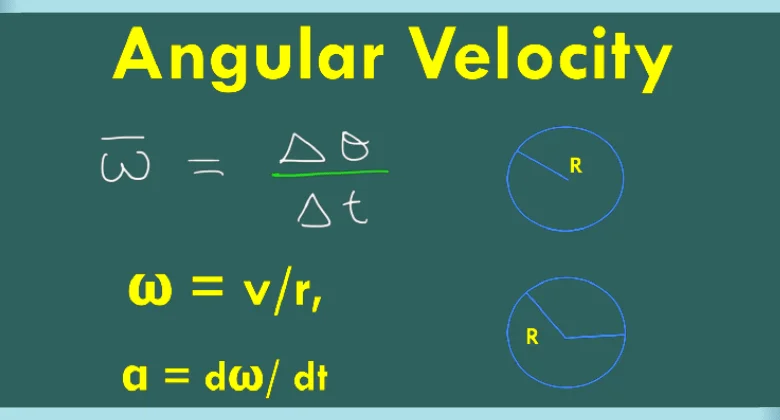
The angular velocity formula is one of the most important concepts in physics and engineering. It helps explain how quickly an object rotates around a fixed axis and plays a crucial role in understanding rotational motion. From spinning wheels and ceiling fans to planets orbiting in space, angular velocity helps describe how fast these objects change their position over time.
Students often encounter the when studying mechanics, but its applications extend far beyond the classroom. Engineers use it when designing machines, scientists rely on it to analyze natural phenomena, and technicians apply it in various industrial processes. Understanding this formula provides a strong foundation for learning more advanced topics in physics.
The popularity of the angular velocity formula comes from its practical value. Once you understand how it works, you can analyze countless rotating systems and better appreciate the principles that govern motion in the physical world.
What Is Angular Velocity?
Before diving deeper into the angular velocity formula, it is important to understand the meaning of angular velocity itself. Angular velocity measures how quickly an object rotates around a particular point or axis.
Unlike linear velocity, which describes motion along a straight path, angular velocity focuses on rotational movement. When a bicycle wheel spins or a clock hand moves, angular velocity is involved. It tells us how much angular displacement occurs during a specific period of time.
The concept behind the allows scientists and engineers to quantify rotational motion in a precise and consistent manner. This makes it easier to compare different rotating systems and predict their behavior.
Understanding the Angular Velocity Formula

The basic angular velocity formula is expressed as the change in angular displacement divided by the change in time. This relationship helps determine how rapidly an object rotates.
Many students find the easier to understand when they compare it to linear velocity. Just as speed measures distance traveled over time, angular velocity measures angular displacement over time.
The simplicity of the angular velocity formula is one reason it remains such a fundamental concept in physics. Despite its straightforward appearance, it can be applied to a wide variety of complex systems and real-world situations.
Why Angular Velocity Matters
The importance of the angular velocity formula extends beyond academic studies. Rotational motion is everywhere, making angular velocity a valuable measurement in numerous industries and scientific fields.
Mechanical engineers rely on the when designing engines, turbines, and manufacturing equipment. Understanding rotational speed helps ensure that machines operate safely and efficiently.
In addition, the plays an essential role in fields such as aerospace engineering, robotics, automotive technology, and astronomy. Without it, analyzing rotational systems would be far more difficult.
Units Used in Angular Velocity
To properly use the angular velocity formula, it is important to understand the units involved. Angular velocity is commonly measured in radians per second.
Radians provide a convenient way to express angular displacement because they directly relate the angle to the radius of a circle. This mathematical relationship simplifies many calculations involving rotation.
The use of radians makes the angular velocity formula particularly useful in advanced physics and engineering applications, where precise calculations are often required.
Real-World Examples of Angular Velocity
One reason the angular velocity formula is so widely taught is because it appears in countless real-world situations. Almost every rotating object can be analyzed using this concept.
A ceiling fan provides a simple example. As the blades rotate around the central axis, the can be used to determine how quickly they complete their motion.
Similarly, vehicle wheels, electric motors, amusement park rides, and industrial machinery all involve rotational movement that can be studied using the angular velocity formula. These examples demonstrate the practical importance of understanding rotational physics.
Angular Velocity and Circular Motion
The relationship between circular motion and the angular velocity formula is extremely important. Circular motion occurs whenever an object travels along a circular path around a fixed center.
Angular velocity provides a way to measure how quickly that movement occurs. The faster an object completes its circular path, the greater its angular velocity.
The connection between circular motion and the allows scientists to analyze everything from rotating gears to planetary orbits using the same fundamental principles.
Applications in Engineering
Engineering is one of the fields where the angular velocity formula has the greatest practical value. Machines often contain rotating components that must operate within specific performance limits.
Engineers use the when designing motors, pumps, turbines, and conveyor systems. Accurate calculations help ensure efficiency, durability, and safety.
The widespread use of the angular velocity formula in engineering highlights its importance as a tool for solving real-world technical challenges.
Angular Velocity in Sports
The angular velocity formula also appears in sports science. Athletes frequently generate rotational motion during competition, whether they realize it or not.
Figure skaters increase their rotation speed by pulling their arms closer to their bodies. Gymnasts perform spins and flips that involve changes in angular velocity throughout their routines.
By applying the angular velocity formula, coaches and sports scientists can better understand athletic performance and identify ways to improve technique and efficiency.
Common Mistakes When Using the Formula
Students learning the angular velocity formula often make several common mistakes. One frequent error involves confusing angular velocity with linear velocity.
Another issue occurs when incorrect units are used. Consistent units are essential for obtaining accurate results when working with rotational motion problems.
Carefully applying the angular velocity formula and understanding the meaning of each variable can help avoid these mistakes and improve overall accuracy.
How Angular Velocity Relates to Angular Acceleration
The angular velocity formula serves as a foundation for understanding angular acceleration. While angular velocity measures rotational speed, angular acceleration measures how quickly that rotational speed changes.
If an object spins faster or slower over time, angular acceleration is present. These two concepts are closely connected and often studied together in mechanics.
Learning the angular velocity formula first makes it easier to understand more advanced topics involving rotational dynamics and motion analysis.
The Role of Angular Velocity in Astronomy
Astronomy provides fascinating examples of the angular velocity formula in action. Planets rotate on their axes while also orbiting stars, creating multiple forms of rotational motion.
Scientists use the to analyze planetary rotation rates, orbital movements, and the behavior of celestial objects throughout the universe.
The ability to apply the angular velocity formula on such a massive scale demonstrates the versatility and power of this fundamental concept.
Benefits of Mastering the Concept
Understanding the angular velocity formula offers several benefits for students, engineers, and science enthusiasts. It provides a deeper appreciation of how rotational systems function in both natural and artificial environments.
Mastering the also improves problem-solving skills. Many advanced physics and engineering concepts build directly upon this foundational knowledge.
As a result, investing time in learning the angular velocity formula can make future studies in science, technology, and mathematics much easier and more rewarding.
Why the Angular Velocity Formula Remains Essential
The angular velocity formula continues to be one of the most widely used concepts in rotational mechanics because of its simplicity and effectiveness. It provides a reliable way to measure rotational speed and analyze motion.
Whether studying machinery, sports performance, transportation systems, or astronomical phenomena, the angular velocity formula remains an indispensable tool for understanding how objects move.
Its relevance across multiple disciplines ensures that it will continue to be taught and applied for generations to come.
Conclusion
The angular velocity formula is a cornerstone of rotational physics that helps explain how objects rotate around an axis. By measuring the relationship between angular displacement and time, it provides valuable insight into countless forms of motion.
From engineering and sports to astronomy and everyday technology, the plays a critical role in understanding the physical world. Its practical applications demonstrate why it remains one of the most important concepts in science and mathematics.
As students and professionals continue exploring rotational mechanics, the angular velocity formula will remain a key tool for analyzing motion, solving problems, and advancing scientific knowledge. Its simplicity, versatility, and real-world relevance make it an essential concept for anyone interested in understanding how rotation works.
You May Also Read