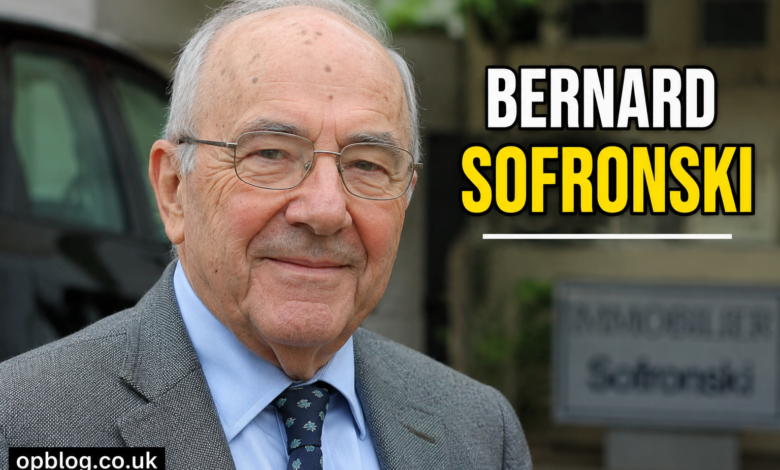
Bernard Sofronski is one of those television figures whose name may not be instantly familiar to the average viewer, yet his career is connected to some remarkably important productions in American television. Working behind the scenes, he built a reputation as a producer and executive who understood both entertainment and the power of serious storytelling.
Born in 1940, Bernard Sofronski began his career with ambitions of becoming an actor before gradually moving toward production and television management. His path took him from radio and theater to CBS, where he eventually became involved in major programming decisions and high-profile television productions.
What makes his career particularly interesting is its range. Sofronski worked on soap operas, television movies, documentaries, miniseries, award shows, feature films, and even Broadway. Rather than being associated with just one genre, he developed a career across several areas of the entertainment business.
Early Life and the Start of His Entertainment Career
Bernard Sofronski was born in 1940 and developed an interest in entertainment while he was still in school. According to his published biography, he participated in school plays during his junior and senior years and began thinking seriously about acting. That early exposure eventually pushed him toward New York and professional theater.
Before moving fully into television production, Sofronski worked as a DJ and radio personality. At 19, he reportedly traveled to New York City with the intention of pursuing acting. He later studied at the Actors Studio under Lee Strasberg, an experience that placed him in an environment surrounded by ambitious performers and future Hollywood names.
His early career was not an overnight success story. Bernard Sofronski performed in off-Broadway productions and summer stock, and he also spent several years performing for the Armed Services. That period gave him practical experience in front of audiences while exposing him to the demanding realities of professional entertainment.
From Acting to Television Production
The transition from acting to producing became the major turning point in Bernard Sofronski career. After returning to New York, he joined CBS’s daytime programming world and became an associate producer on the long-running soap opera Search for Tomorrow. His responsibilities expanded quickly.
Within a year, he had reportedly been promoted to executive producer. The show eventually reached the top of the ratings, giving Sofronski an early demonstration of how much influence a producer could have over a large television operation. He also worked on Another World, which became notable for its transition to a one-hour format.
That experience helped move him away from being primarily an aspiring performer and toward becoming a television decision-maker. Instead of appearing on screen, Sofronski increasingly worked on the business, creative, and production side of the industry.
His Rise at CBS
CBS became one of the most important chapters in Bernard Sofronski professional life. After his work in daytime television attracted attention from network management, he moved into programming positions and eventually became involved with prime-time and special programming.
His responsibilities grew to include movies, miniseries, documentaries, award programs, and other major television events. This was a period when network television had enormous cultural influence, meaning programming executives could shape what millions of households watched.
Sofronski’s CBS career also gave him an opportunity to work Bernard Sofronski with major entertainment personalities and established production teams. His responsibilities reportedly included supervision of broadcasts such as the Emmy Awards, Grammy Awards, Country Music Association Awards, and other major specials.
A Connection to the Kennedy Center Honors
One of the more notable parts of Sofronski’s career was his involvement in creating the Kennedy Center Honors. According to his biography, he and George Stevens Jr. helped develop the program as a way to recognize major creative artists for their lifetime contributions to American culture.
The concept was significant because it created a nationally televised celebration focused on lifetime artistic achievement rather than a single performance or competition. The honors became an annual Washington, D.C., event involving prominent figures from the arts and entertainment world.
For Bernard Sofronski, the project represented a different side of television production. It was not simply about ratings or entertainment value; it was about building a program that could become part of America’s cultural calendar.
Producing Powerful Television Movies
Sofronski’s reputation grew further through television movies and dramatic productions. One of his best-known credits is Playing for Time, a television drama based on the true story of an all-female orchestra at a Nazi concentration camp.
The production became a major critical and awards success. Bernard Sofronski According to the biography associated with Sofronski’s career, Playing for Time received multiple Emmy nominations and won four awards, including recognition for Vanessa Redgrave, Jane Alexander, and screenwriter Arthur Miller.
The project illustrates the type of material that became a recurring feature of his career: historical stories, difficult subjects, and productions designed to do more than provide lightweight entertainment. Sofronski repeatedly worked on television projects dealing with war, politics, crime, social conflict, and real-life events.
Major Projects That Defined His Career
The list of productions connected to Bernard Sofronski is extensive. His credits include Bill, The Wall, Skokie, Guyana Tragedy: The Story of Jim Jones, Into Thin Air: Death on Everest, and Mandela and de Klerk. Television databases also list him as an executive producer on projects such as Mom at Sixteen and Murder in Greenwich.
His work on Mandela and de Klerk is another example of his interest in historical and political subjects. The television film starred Sidney Poitier as Nelson Mandela and Michael Caine as F. W. de Klerk and was produced for Showtime. Historical television publications also identify Sofronski as its producer.
He also worked on Alex Haley’s Queen, the miniseries based on Alex Haley’s work. The Television Academy lists Sofronski as a nominee for Outstanding Miniseries for the 1993 production.
His Emmy Recognition
Awards provide another way to measure the significance of Bernard Sofronski‘s career. The Television Academy’s official database lists him as an Emmy nominee for Alex Haley’s Queen in the Outstanding Miniseries category and for Almost Golden: The Jessica Savitch Story in Outstanding Made for Television Movie.
His career biography also credits him with additional Emmy nominations for other productions. These nominations demonstrate that his work was recognized within an industry where competition for major television awards was intense.
It is worth noting that awards are only one part of a producer’s legacy. Bernard Sofronski A producer’s influence often comes from projects that audiences remember years later, even when the producer himself remains largely unknown to the public.
Feature Films and the CBS Movie Division
After spending years working in network television, Bernard Sofronski moved into feature-film leadership at CBS. He reportedly became Senior Vice President and Creative Head of Feature Films, giving him responsibility for projects involving major directors and actors.
Among the productions associated with this period were Turtle Diary, Target, and Kiss of the Spider Woman. Target, for example, was directed by Arthur Penn and featured Matt Dillon and Gene Hackman. Sofronski is credited as executive producer on the film.
This phase showed that his production experience was not limited to television. He was able to move between different formats while continuing to work with established filmmakers and performers.
A Brief Move Into Broadway
Film and television were not the only areas that attracted Sofronski. He also returned to the theater world and produced the Broadway play The Boys of Winter.
The production focused on young men and the Vietnam War, reflecting the serious subject matter that appeared frequently throughout Sofronski’s career. The play also featured actors Matt Dillon and Wesley Snipes, giving it a notable cast.
His move into Broadway was a natural extension of his earlier theater experience. Before becoming a producer, he had spent time acting in stage productions, so returning to the theater from the producer’s side brought his career almost full circle.
Working With David Wolper and Warner Bros.
Another important chapter came when Sofronski worked in association with legendary producer David Wolper and Warner Bros. Their television projects included Roots: The Gift, Fatal Deception: Mrs. Lee Harvey Oswald, and Napoleon and Josephine: A Love Story.
This period allowed Sofronski to continue producing stories rooted in history and real events. Fatal Deception, for example, explored the life of Marina Oswald, the wife of Lee Harvey Oswald, while Roots: The Gift extended the legacy of the groundbreaking Roots television phenomenon.
His involvement in these projects reinforced a pattern visible throughout his career: he repeatedly gravitated toward stories with historical, political, or emotional weight.
Bernard Sofronski and Susan Dey
Sofronski’s personal life has also attracted some attention because of his long relationship with actress Susan Dey. IMDb’s biographical information lists the couple as having married on February 20, 1988.
Dey was already a familiar television face through her work on The Partridge Family and L.A. Law. Her career was primarily in acting, while Sofronski’s professional path developed behind the camera.
The two therefore came from different sides of the entertainment industry, although both had long careers connected to television. Publicly available information about their private life is relatively limited, which makes it sensible to focus on documented professional achievements rather than speculation.
Why His Career Still Matters
At first glance, Bernard Sofronski may appear to be another name buried deep in television credits. Look more closely, however, and a much larger career emerges.
He worked during a period when network television had enormous cultural power. Producers and programming executives could influence which stories reached national audiences, and Sofronski was repeatedly involved in projects dealing with major historical and social themes.
His career is also a useful reminder of how television is actually made. Viewers tend to remember actors, directors, and writers, but producers often coordinate the practical and creative elements that make ambitious productions possible.
Final Thoughts on Bernard Sofronski
Bernard Sofronski built a career that stretched across acting, radio, theater, television production, network programming, feature films, and Broadway. His transition from performer to producer ultimately became the defining move of his professional life.
From Search for Tomorrow and CBS programming to acclaimed television dramas such as Playing for Time, Queen, and Mandela and de Klerk, his credits show a consistent interest in ambitious projects. His work earned Emmy recognition and connected him with some of the most prominent names in American entertainment.
Perhaps the most interesting thing about Bernard Sofronski is that his influence was often felt without his face being on screen. He operated behind the scenes, helping bring complicated stories and major television events to audiences. That kind of career rarely produces the same celebrity recognition as acting, but it can leave a lasting mark on the medium.
For anyone researching the history of American television, Sofronski’s career offers a fascinating look at the producer’s role—and at how one professional journey can connect daytime soap operas, network programming, award shows, television movies, feature films, and Broadway.
You May Also Read