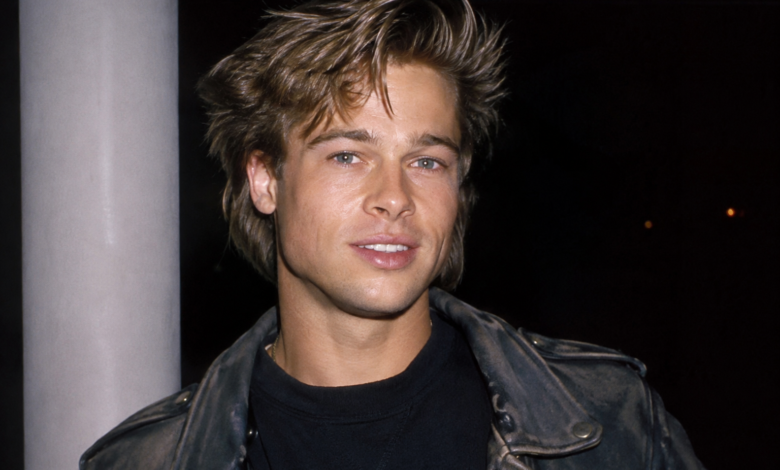
Brad Pitt Young they are usually curious about what the Hollywood star looked like before he became one of the most recognizable actors in the world. Long before Fight Club, Troy, Ocean’s Eleven, and Once Upon a Time in Hollywood, Pitt was a young actor trying to establish himself in an extremely competitive industry.
His early years are particularly interesting because the version of Pitt remembered from the 1990s did not appear overnight. His appearance, screen presence, acting choices, and public image developed gradually through small television roles, supporting performances, and eventually a handful of movies that changed his career.
Pitt’s rise is also a useful reminder that Hollywood success rarely happens with one role. He worked through uncertainty before finding opportunities that matched his abilities and appearance.
Looking back at Brad Pitt young gives us a chance to understand not only his famous looks, but also the career decisions that turned a promising actor into an international movie star.
Brad Pitt’s Early Life
Brad Pitt was born William Brad Pitt Young on December 18, 1963, in Shawnee, Oklahoma. His family later moved to Springfield, Missouri, where he spent much of his childhood.
He grew up in a relatively traditional American household. His father, William Alvin Pitt, worked in the trucking business, while his mother, Jane Etta, was a school counselor.
Nothing about Pitt’s early family background suggested that he was destined to become a Hollywood celebrity. He attended Kickapoo High School in Springfield and later enrolled at the University of Missouri.
At university, Pitt studied journalism with a focus on advertising. He was reportedly only a short time away from graduating when he decided to leave school and pursue acting in California.
That decision changed everything.
Brad Pitt Young and His Move to Hollywood

The story of Brad Pitt Young becomes especially interesting when he leaves Missouri for Los Angeles. Moving across the country to pursue acting was a major gamble for someone without an established Hollywood connection.
Pitt arrived in California with ambition but little professional experience. Like many aspiring actors, he had to find ways to survive while searching for opportunities.
He reportedly worked various jobs, including driving and helping with other businesses, while attending acting classes.
That period was far removed from the glamorous image associated with him today. He was not yet a famous actor walking red carpets. He was simply another young performer trying to get noticed.
The experience likely helped develop the patience required for a career in an industry where rejection is part of everyday life.
His First Acting Roles
Pitt began appearing in television shows during the late 1980s. His early credits included guest roles on programs such as Dallas, Growing Pains, and 21 Jump Street.
These roles were relatively small, but they gave him something important: experience in front of professional cameras.
Television was a common entry point for young actors at the time. Brad Pitt Young Guest appearances allowed performers to build résumés and demonstrate that they could handle professional production environments.
Pitt’s good looks naturally attracted attention, but appearance alone could not create a lasting career. He needed to prove that he could actually perform.
His early television work gave him the opportunity to do exactly that.
Brad Pitt Young in Thelma & Louise
One of the biggest turning points in Brad Pitt young was his appearance in Thelma & Louise in 1991.
Pitt played J.D., a charming young hitchhiker who becomes involved with Thelma, played by Geena Davis.
He was not the main character, but the role had an enormous impact on his career. His appearance, confidence, and screen presence immediately caught the attention of audiences.
Suddenly, Pitt was no longer just another young actor with television credits. Hollywood began to see him as a potential leading man.
The role became so closely associated with his early image that it remains one of the first performances people mention when discussing his rise to fame.
Why Thelma & Louise Changed Everything
The impact of Thelma & Louise went beyond the amount of screen time Pitt received. His performance demonstrated that he could make a strong impression even without dominating the movie.
That quality became an important part of his career. Brad Pitt Young learned how to use physical presence, facial expression, confidence, and restraint to make characters memorable.
The film also introduced him to a much larger audience.
Suddenly, casting directors had a reason to remember his name.
The combination of talent and striking appearance created a powerful Hollywood package. But Pitt did not simply accept every role offered to him afterward. His choices became increasingly important as his career developed.
Brad Pitt in the Early 1990s
After Thelma & Louise, Pitt began taking on more substantial roles. He appeared in films such as A River Runs Through It, Kalifornia, and True Romance.
A River Runs Through It was particularly important because it allowed him to demonstrate that he could carry a more serious dramatic performance.
Directed by Robert Redford, the film presented Pitt as Paul Maclean, a talented and complicated young man whose life becomes increasingly troubled.
The role helped move him beyond the idea that he was simply a handsome newcomer.
That distinction mattered. Hollywood has always had plenty of attractive actors, but longevity requires something more. Pitt’s early dramatic work showed that he had the potential to build a much more substantial career.
His Look During His Younger Years
The phrase Brad Pitt young is often associated with his appearance, and there is a reason for that. During his late 20s and early 30s, Pitt became known for his blond hair, strong jawline, lean build, and distinctive facial features.
His appearance was especially noticeable because it changed from role to role.
Sometimes he wore longer hair. Other performances called for shorter cuts, facial hair, or a more rugged look.
Rather than maintaining one permanent image, Pitt adapted his appearance to the character.
That flexibility became part of his appeal. Audiences could recognize him while still believing that he belonged in very different stories.
Brad Pitt and Interview with the Vampire
In 1994, Pitt appeared alongside Tom Cruise in Interview with the Vampire. The movie was based on Anne Rice’s popular novel and gave Pitt a major international platform.
He played Louis de Pointe du Lac, a vampire struggling with morality, immortality, and his complicated relationship with Lestat.
The role was visually striking, Brad Pitt Young but it also required Pitt to explore darker emotional material.
His performance demonstrated that he could work effectively opposite another major star without disappearing into the background.
By this point, Pitt was no longer simply a promising young actor. He had become one of Hollywood’s most recognizable rising stars.
Se7en and a More Serious Image
The following year brought Se7en, directed by David Fincher. Pitt starred opposite Morgan Freeman as Detective David Mills.
This role was significant because it moved him further into darker, more psychologically demanding territory.
Instead of relying primarily on charm, Brad Pitt Young had to portray frustration, impatience, fear, and emotional vulnerability.
The film became a major success and further strengthened his reputation as a serious actor.
It also established an important pattern in his career: Pitt was willing to move between commercial movies and challenging material rather than staying inside one narrow category.
Brad Pitt Young in Fight Club
Few movies are more strongly associated with Pitt’s younger image than Fight Club.
Released in 1999 and directed by David Fincher, the film featured Pitt as Tyler Durden, an unpredictable and charismatic character who becomes central to the story.
The physical transformation was striking. Pitt appeared lean, athletic, and highly stylized, creating a look that became one of his most recognizable.
But the performance itself mattered just as much.
Tyler Durden was not simply attractive. He was provocative, manipulative, confident, funny, and dangerous. Pitt embraced those contradictions and created a character that became deeply embedded in popular culture.
The Style of Brad Pitt in the 1990s
The fashion associated with Brad Pitt young also became influential. During the 1990s, he frequently appeared with casual clothing, denim, leather jackets, simple shirts, and changing hairstyles.
His style was generally less formal than the classic Hollywood leading-man image.
That helped make him appear accessible despite his increasingly enormous fame.
The Fight Club era especially influenced men’s fashion and fitness culture. The lean physique, short hair, casual clothing, and minimalist aesthetic became recognizable far beyond the movie itself.
Why His Early Appearance Became So Iconic
Pitt’s looks were certainly a factor in his rise, but reducing his early career to appearance would overlook the most important part.
Many attractive actors receive attention early in their careers. Far fewer manage to remain major stars for decades.
Pitt combined his appearance with strong screen presence and increasingly ambitious roles.
He also developed an ability to switch between different character types Brad Pitt Young. That range helped audiences see him as an actor rather than simply a celebrity.
His career therefore demonstrates how appearance can open a door, but talent and decision-making determine whether someone stays in the room.
From Young Star to Established Actor
By the early 2000s, Pitt had moved firmly into established leading-man territory.
Movies such as Ocean’s Eleven, Troy, and Mr. & Mrs. Smith expanded his commercial appeal while allowing him to explore different genres.
His role in Ocean’s Eleven showed his ability to combine comedy, charm, and understated confidence.
Troy emphasized his physical presence, while Mr. & Mrs. Brad Pitt Young Smith placed him in an action-comedy setting alongside Angelina Jolie.
Each project added another layer to his public identity.
The young actor who once appeared briefly in Thelma & Louise had become a global movie star.
Acting Beyond His Looks
One of the most impressive aspects of Pitt’s career is that he eventually moved beyond the image created by his early appearance.
He accepted unusual roles, worked with respected directors, and sometimes deliberately played characters who were far removed from the traditional handsome leading man.
His performances in films such as 12 Monkeys, Snatch, The Assassination of Jesse James by the Coward Robert Ford, and Moneyball demonstrated different sides of his acting ability.
That willingness to experiment helped protect his career from becoming dependent on youth.
Instead of trying to remain forever frozen in his 1990s image, Pitt allowed his screen identity to evolve.
Brad Pitt’s Lasting Influence
Looking back at Brad Pitt young is not simply an exercise in nostalgia. His early career influenced how Hollywood marketed male stars during the 1990s and early 2000s.
He represented a combination of classic movie-star looks and a willingness to take unconventional roles.
That mixture made him commercially valuable while also earning respect from filmmakers.
Younger actors have often faced the same challenge: being recognized for appearance while trying to prove that they have genuine acting ability.
Pitt’s career is an example of how that challenge can be managed successfully.
What Made His Early Career Different?
Pitt’s rise was not based on one massive blockbuster. Instead, it developed through a sequence of increasingly important roles.
A small part in Thelma & Louise created attention. A River Runs Through It demonstrated dramatic potential. Interview with the Vampire expanded his international visibility. Se7en established his ability to handle darker material. Fight Club cemented his cultural influence.
Each step built on the previous one Brad Pitt Young.
That gradual progression is one reason his career remains interesting to study. The transition from young newcomer to established star happened through accumulation rather than overnight success.
Final Thoughts on Brad Pitt Young
The story of Brad Pitt young is ultimately about much more than an iconic face or a particular hairstyle. His early years show how a talented newcomer gradually built a career through persistence, carefully chosen roles, and a willingness to take creative risks.
From leaving university in Missouri to pursue acting in California to landing a memorable role in Thelma & Louise, Pitt’s journey was anything but guaranteed.
His performances in A River Runs Through It, Interview with the Vampire, Se7en, and Fight Club helped transform him from a promising young actor into one of Hollywood defining stars.
His appearance certainly played a role in attracting early attention, but it was his ability to evolve that allowed his career to last.
Today, looking back at Brad Pitt young provides a fascinating snapshot of a period when one of Hollywood’s most recognizable actors was still discovering exactly what kind of performer he wanted to become. His early image may have made him famous, but his choices as an actor are what turned that fame into a lasting career.
You May Also Read